



Gathering What Grew
The autumn equinox isn't a productivity push — it's an invitation to slow down, gather what grew this year, and see who you’ve become.

Rooted Words: Selenophile~ Love of the Moon
It’s interesting to consider the phases of the moon and what they mean with the unfolding of healing. We have our own new moons — our quiet, withdrawn periods when something is forming beneath the surface and we are not yet ready to be seen. We have our full moons — moments of overwhelm when everything feels like too much. And we have our waning times, when we are slowly releasing something we've carried far longer than we realized. Healing, like the moon, moves in cycles, not always as predictable as the phases of the moon but we do tend to circle back (see this post for more info). Sometimes we darken and brighten and then darken again. This is not a sign that something has gone wrong. This is simply the nature of all things.

Beyond Resilience: Navigating the Path to Post-Traumatic Growth
We tend to imagine that healing means returning to who we were before. Getting back to normal. Closing the chapter. Consider that there is a different possibility, one that researchers named years ago and that women have worked for for far longer: post-traumatic growth. It is the phenomenon of experiencing genuine, positive change as a result of struggling with the hardest things life has asked us to carry.
Rest and Restore Protocol™ (RRP): A Gentle Pathway to Nervous System Regulation
Rather than asking the nervous system to “push through” or actively engage, RRP is designed to support down-shifting—helping the body move out of chronic activation or collapse and toward a more settled internal state. Many people experience it as deeply calming, grounding, and supportive of rest and recovery.

The Difference Between Calming Down and Regulating
There's nothing wrong with needing to calm down. It's a skill worth having. But if it's the only tool in the kit, the body starts to read life as a series of near-misses to be managed, rather than a place you actually live. Here's how to tell the difference — and a three-minute practice for the return.

Regulating Practice: Creating A Simple Ritual To Bring Us Back To Ourselves
You’re creating a small structure—a place your attention can return to. A kind of rhythm or ritual. Over time, those moments can start to feel a little more available and steady. Not because everything has changed, but because your relationship to the moment has. You are creating a pocket of solace that belongs to you.
There is rebirth and new growth all around. We hear how uplifting this season can be, yet at the same time, these reminders of renewal don’t always land that way for everyone. Sometimes they can bring up something else entirely—a quiet grief, a sense of distance, or the feeling that the world is moving forward while something in us is still catching up.

Safe and Sound Protocol or SSP: Listening for Safety in the Nervous System
Most of us don’t struggle because we lack insight or effort.
We struggle because our nervous systems have learned—often through lived experience—that the world is unpredictable, unsafe, or overwhelming.
When the body is stuck in survival mode, it becomes harder to rest, connect, think clearly, or feel at ease in relationships. This isn’t a personal failing. It’s biology doing its best to protect us.
The Safe and Sound Protocol (SSP) is a gentle, listening-based approach designed to support the nervous system in doing something many of us haven’t felt in a long time: settling into safety.

How to make the shift from Self-Discipline to Self-Devotion
Self-devotion shifts the question from: “How do I make myself do this?” to: “What is needed here — and can I meet it with care?”
Self-discipline asks the body to obey. Self-devotion asks the body to belong and belonging — to yourself — may be the most radical form of healing there is.
Self-discipline is often framed as virtue — the ability to override discomfort in pursuit of improvement, but the nervous system doesn’t heal because we override discomfort. It heals because it experiences safety. As Dr. Stephen Porges, who developed the Polyvagal Theory, has said- safety IS the treatment.
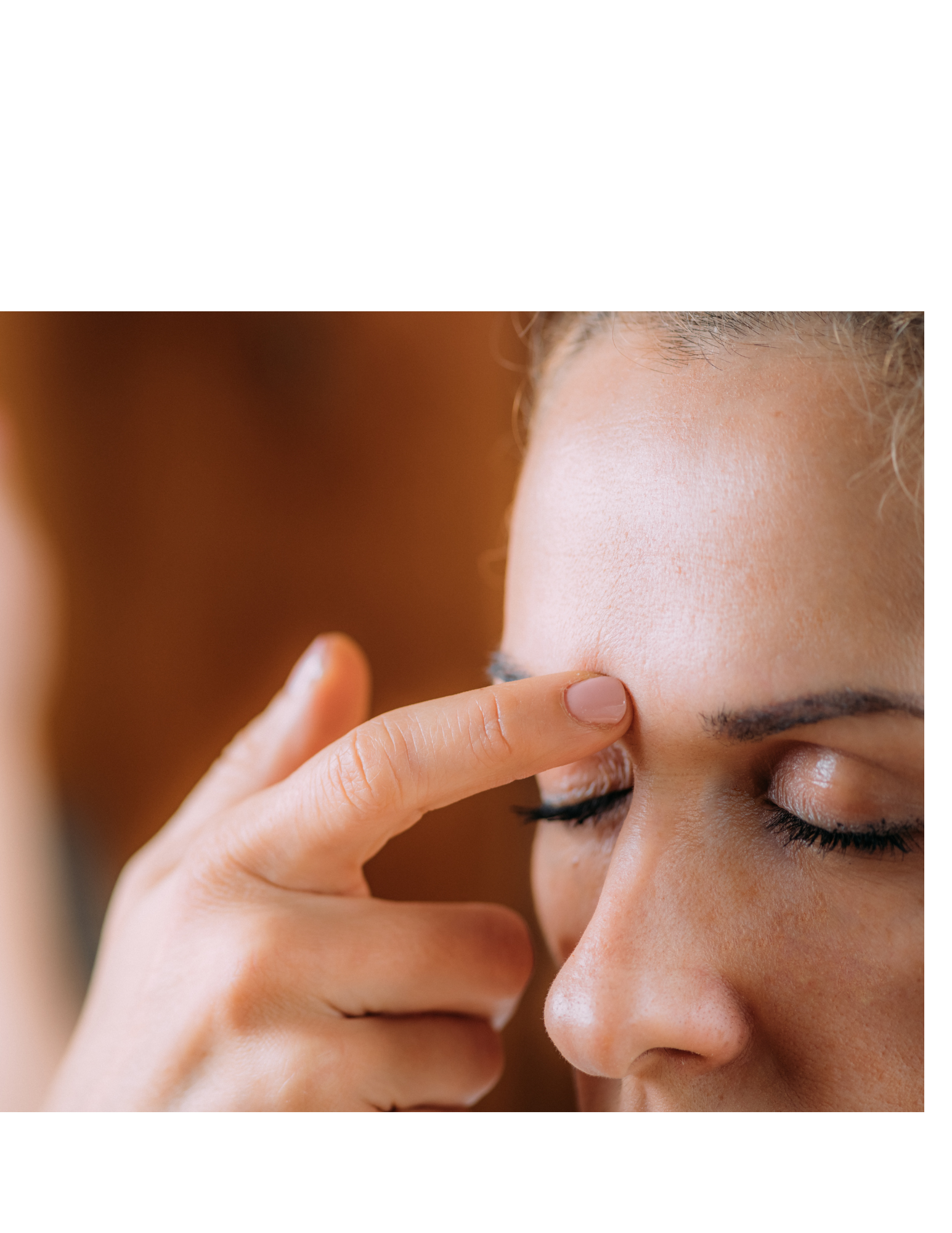
TFT and EFT: Two Tapping-Based Approaches for Nervous System Regulation & Healing
Thought Field Therapy (TFT) is a tapping-based method developed in the 1980s that works with the idea that emotional distress is linked to disruptions in the body’s energetic and neurological patterns. TFT uses specific tapping sequences, often called algorithms, that correspond to particular emotional states.
In practice, TFT is structured and practitioner-guided. The facilitator helps identify the focus of distress and applies a sequence designed to support the nervous system in settling its response to that specific issue. TFT does not require extensive storytelling or emotional reliving, which can feel supportive for individuals who become overwhelmed by traditional talk-based approaches.
Trauma Healing Isn’t a Linear Process
Healing from trauma doesn’t move in a straight line. It unfolds in layers—sometimes steady, sometimes circling back, sometimes asking for more time than we expected. What can feel like going backwards is often something else entirely: your nervous system returning to a place that is now safe enough to process more deeply. This isn’t failure. It’s movement. And it’s often a sign that healing is actually happening.