


Safe and Sound Protocol (SSP)
A research-backed listening therapy that sends cues of safety to your nervous system — helping you think, feel, and connect more freely.
When Safety Feels Out of Reach
Your nervous system is constantly working in the background, scanning your environment for cues that tell it whether you are safe or in danger. This process happens automatically and beneath conscious awareness — it is not something you choose or control.
For most people, the nervous system moves fluidly between states of alertness and rest. But when past experiences, trauma, or neurodivergence have shaped the way your nervous system interprets the world, it can become stuck — defaulting to states of high alert, shutdown, or disconnection, even when the threat has long since passed.
If you find yourself struggling with any of the following, your nervous system may be working harder than it needs to:
Persistent anxiety, emotional overwhelm, or difficulty calming down
Trouble sleeping, concentrating, or thinking clearly
Digestive issues or unexplained physical tension
Difficulty connecting with others or feeling socially at ease
Sensory sensitivities or feeling easily overstimulated
A pervasive sense of feeling unsafe, disconnected, or emotionally flat
You are not overreacting. Your nervous system is doing exactly what it was built to do. The Safe and Sound Protocol offers it a new experience — one of safety, rather than threat.

What is the Safe and Sound Protocol?
The Safe and Sound Protocol (SSP) is a research-based, non-invasive listening therapy developed by Dr. Stephen Porges — the neuroscientist behind Polyvagal Theory — one of the most influential frameworks in modern trauma and nervous system science.
At its core, the SSP uses specially filtered music to send gentle, targeted cues of safety directly to the autonomic nervous system. The music has been processed through a patented algorithm that emphasizes the specific sound frequencies most closely associated with the human voice — the same frequencies your nervous system instinctively listens for when determining whether you are safe in the presence of another person.
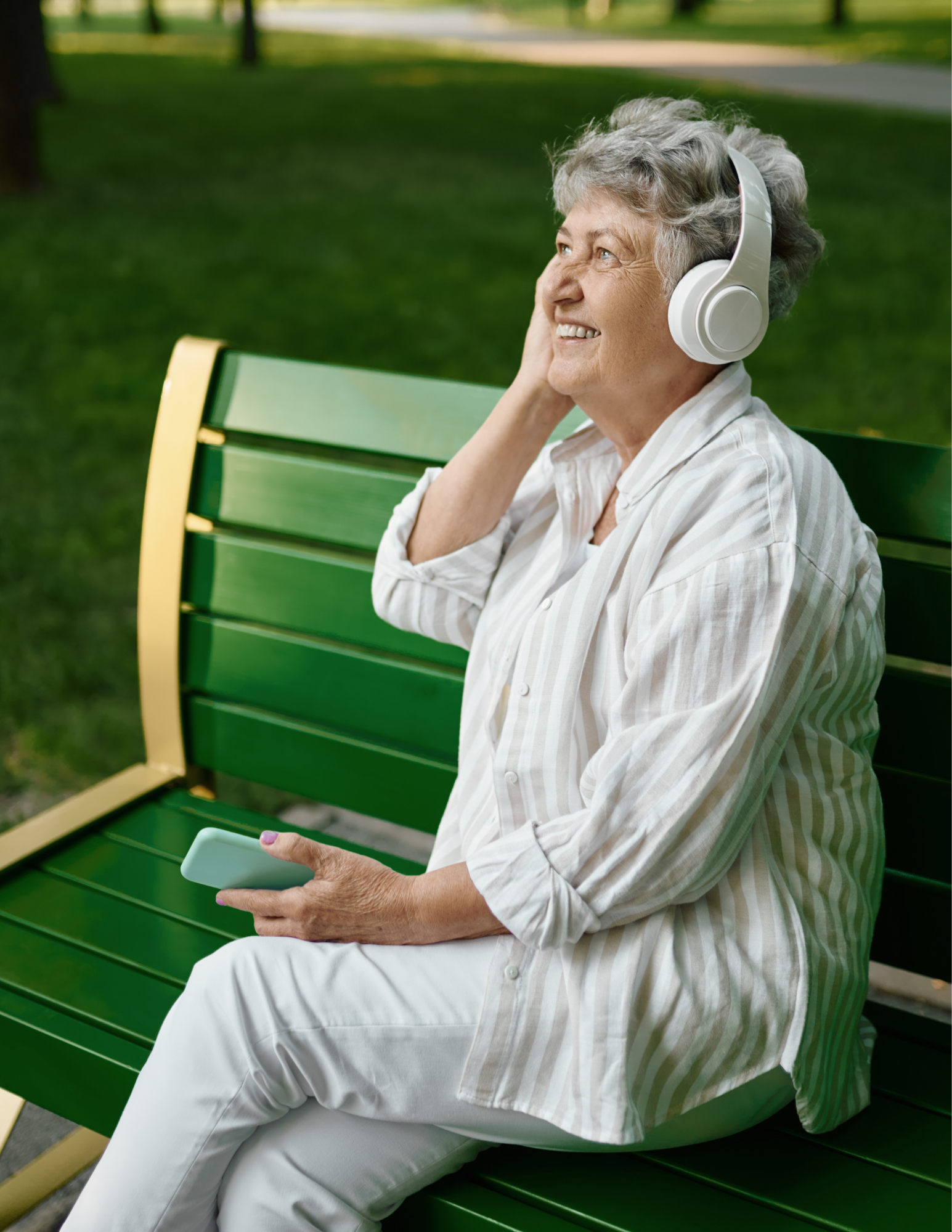
Five hours of music. Delivered at your own pace. And beyond simply listening, there is nothing you need to do — the work happens at a biological level, quietly and without effort.
The SSP has supported over 100,000 people across more than 70 countries, with published research appearing in peer-reviewed journals including the Harvard Review of Psychiatry.

The Science Behind the SSP
To understand why the SSP works, it helps to understand a little about how your nervous system is organized.
-
The Autonomic Nervous System governs your body's involuntary functions — breathing, heart rate, digestion, sleep — and is constantly asking a single, silent question: Am I safe?
When the answer is yes, your parasympathetic nervous system supports rest, recovery, digestion, and social connection. When the answer is no, your sympathetic nervous system mobilizes your body into fight-or-flight — increasing heart rate, tightening muscles, and narrowing focus to the perceived threat.
-
For many people who have experienced chronic stress or trauma, the nervous system becomes calibrated toward threat, even in objectively safe environments. It can become increasingly difficult to access the relaxed, socially engaged state where healing, learning, and genuine connection are possible.
-
Polyvagal Theory, developed by Dr. Porges, reveals that the vagus nerve — a key component of the parasympathetic nervous system — plays a central role in this process. Through the SSP, the specially filtered music activates the neural pathways associated with safety and social engagement, gently interrupting the cycle of dysregulation and inviting the nervous system into a new, more settled baseline.
Trauma and post-traumatic stress
Anxiety and depression
Autism and neurodevelopmental differences
Sensory processing differences and hypersensitivity
What SSP Can Support
The Safe and Sound Protocol may be a helpful addition to your healing journey if you are navigating:
Attention and learning difficulties
Sleep disturbances and chronic fatigue
Digestive and gut-related conditions
Difficulty with social connection and relationships
Emotional dysregulation and nervous system depletion
The SSP is suitable for children, adolescents, and adults. Many families find it meaningful to experience the protocol together.




What to Expect from Your SSP Experience
-
Your role as the listener is beautifully simple. During each session, you listen to the music — that is all that is required. You may be invited to engage in light, regulating activities alongside the listening, such as gentle movement, breathwork, or drawing. Most importantly, you stay in communication with me so we can adjust the pace and conditions to suit your nervous system's needs.
-
My role as your certified SSP provider is to prepare you, guide you, and support you throughout the entire process. Before you begin listening, we will take time to ensure you feel informed and ready. I will create an individualized listening plan for you, monitor your progress throughout, and make sure you are moving through the program at a pace that feels safe and supportive — never too fast, never too rushed.
Fees for SSP (Safe & Sound Protocol) and RRP (Rest & Restore Protocol)
SSP Works Beautifully Alongside Other Therapies
The SSP is delivered entirely remotely, meaning you can experience it from the comfort and familiarity of your own home — an environment where your nervous system already has some existing sense of safety. of the most compelling aspects of the SSP is how naturally it supports and deepens other therapeutic work you may already be engaged in. Because the SSP works passively on the autonomic nervous system — simply through listening — it creates a more regulated foundation that makes other therapies more accessible and effective. It pairs well with somatic therapies such as EMDR, Somatic Experiencing, and Internal Family Systems (IFS), occupational, physical, and speech therapy, sensory integration approaches, talk therapy including CBT, DBT, and MCBT, bodywork, yoga, and other nervous system practices, as well as the Rest and Restore Protocol (RRP).
A Note from Dawn
I really appreciate SSP because it asks so little and offers so much. For clients who have spent years working hard at their healing — analyzing, processing, pushing — there is something quietly profound about a therapy that simply says: rest, listen, and let your nervous system find its own way back to safety. I have seen this protocol open doors that had felt firmly closed, and I consider it one of the most gentle and powerful tools in my practice.
I offer SSP remotely so that you can receive this support in your own space, on your own terms — because healing should never feel like one more thing you have to get through. It should feel like coming home.