

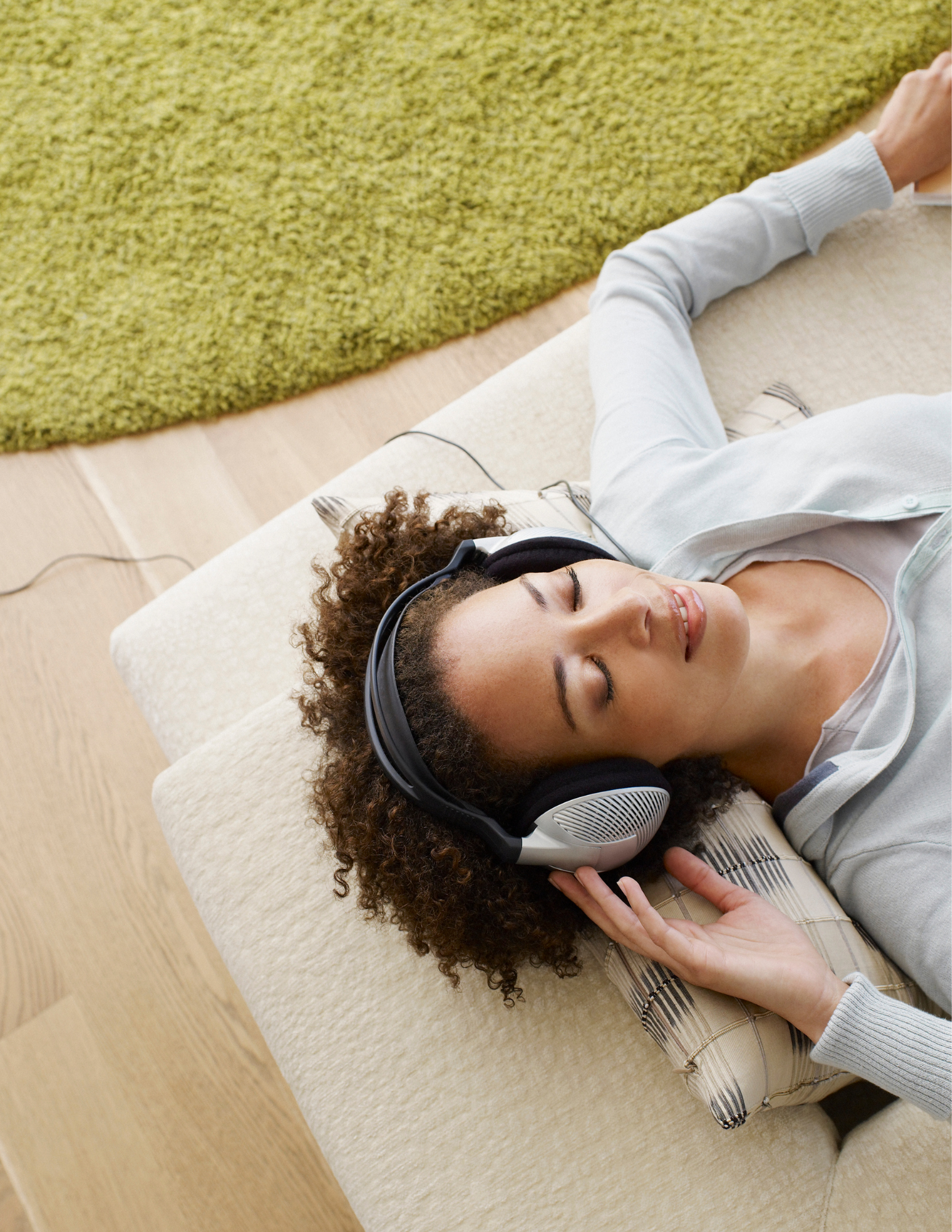

What is the Rest and Restore Protocol™?
The Rest and Restore Protocol™ (RRP) is an innovative, clinical-grade listening therapy that works by gently restoring the body's natural physiological rhythms — including heart rate, respiration, blood pressure, and digestive function — to support deep relaxation, mental clarity, and physical restoration.
Unlike many therapeutic approaches, RRP asks very little of you. You simply listen. There is nothing to practice, process, or perform. The work happens quietly, at a biological level, while you rest.
RRP's music is enhanced by Sonocea® — a patent-pending sound technology that uses acoustic principles to synchronize with your body's own natural rhythms, sending gentle cues of safety to your nervous system and inviting it out of survival mode.
Rest and Restore ProtocoL (RRP)
A gentle, research-informed listening therapy designed to help your nervous system find its way back to calm.
When Your Nervous System Gets Stuck
Your autonomic nervous system works quietly in the background, managing everything from your breathing and digestion to your sleep and ability to connect with others. When life feels safe, it hums along without much effort. But when we experience stress, trauma, or the unique challenges of neurodivergence, this system can become locked in a state of high alert — or shut down entirely — long after the threat has passed.
If you find yourself struggling with any of the following, your nervous system may be asking for support:
Disrupted sleep or chronic fatigue
Digestive issues or gut discomfort
Difficulty concentrating or thinking clearly
Anxiety, low mood, or emotional overwhelm
A persistent sense of feeling unsafe or disconnected from others
You are not broken. Your nervous system is doing exactly what it was designed to do — it may simply need a gentle, guided path back to balance.

What the Research Shows
RRP is grounded in decades of research on physiological rhythms and the body's innate capacity for healing. Preliminary findings from pilot studies are promising:
88% of clients with trauma-related symptoms reported meaningful improvement following RRP
93% of clients experiencing anxiety reported improvement following RRP
76% of clients with insomnia-related symptoms reported improvement following RRP
82% of clients with depression symptoms reported improvement following RRP
Research and development are ongoing, and individual results will vary. RRP is intended to complement, not replace, other therapeutic support.
RRP Works Beautifully Alongside Other Therapies
One of the things I appreciate most about RRP is how naturally it integrates with other healing modalities. If you are already working with another practitioner or engaged in other therapeutic approaches, RRP can complement and deepen that work. It pairs well with somatic therapies such as EMDR, Somatic Experiencing, and Internal Family Systems (IFS), occupational and physical therapy, talk therapy approaches including CBT, DBT, and MCBT, bodywork, yoga, and other nervous system practices, as well as the Safe and Sound Protocol (SSP).

Who Can Benefit from RRP?
RRP may be a supportive option for those navigating:
Trauma history and post-traumatic stress
Anxiety and depression
Sleep difficulties
Gastrointestinal and gut-related conditions
Chronic health conditions and functional disorders
Sensory sensitivities and neurodivergence
Fees for SSP (Safe & Sound Protocol) and RRP (Rest & Restore Protocol)
A Note from Dawn
I offer RRP because I have seen firsthand how much the nervous system can shift when it is given the right conditions to heal — without being pushed, prodded, or asked to perform. This is gentle work, and that gentleness is intentional. You deserve a path to healing that feels as safe as the destination.